Dialysis patient psychology is especially important when a patient travels abroad for treatment for the first time.
In this moment, the patient is not just managing dialysis. They are adjusting emotionally to a new environment, new people, and a different care experience.
At bookdialysis.com, we focus on understanding how patients feel, because this shapes how supported and safe they feel throughout their journey.
How the Patient Feels: A Closer Look at Dialysis Patient Psychology
Increased Sensitivity to Environment
When travelling on dialysis for the first time, patients are often more aware of everything around them.
They may notice:
- Small differences in routine
- Changes in communication style
- New surroundings and processes
This heightened awareness is a natural part of dialysis patient psychology. Patients are trying to understand and adjust at the same time.
A Strong Need for Reassurance
Patients often look for subtle signs that everything is going well.
This may include:
- Observing how staff communicate
- Noticing how organised the clinic feels
- Paying attention to how they are treated
Even small moments of reassurance can have a strong emotional impact.
Quiet Observation and Adaptation
Many patients will not immediately express how they feel.
Instead, they:
- Observe carefully
- Take time to build trust
- Adjust gradually to the new setting
Understanding this behaviour is key to supporting dialysis patient psychology in a meaningful way.
The Importance of Feeling Seen
Patients want to feel recognised as individuals, not just as part of a process.
Simple human connection helps:
- Using their name
- Making eye contact
- Showing genuine care
These moments support emotional comfort and trust.

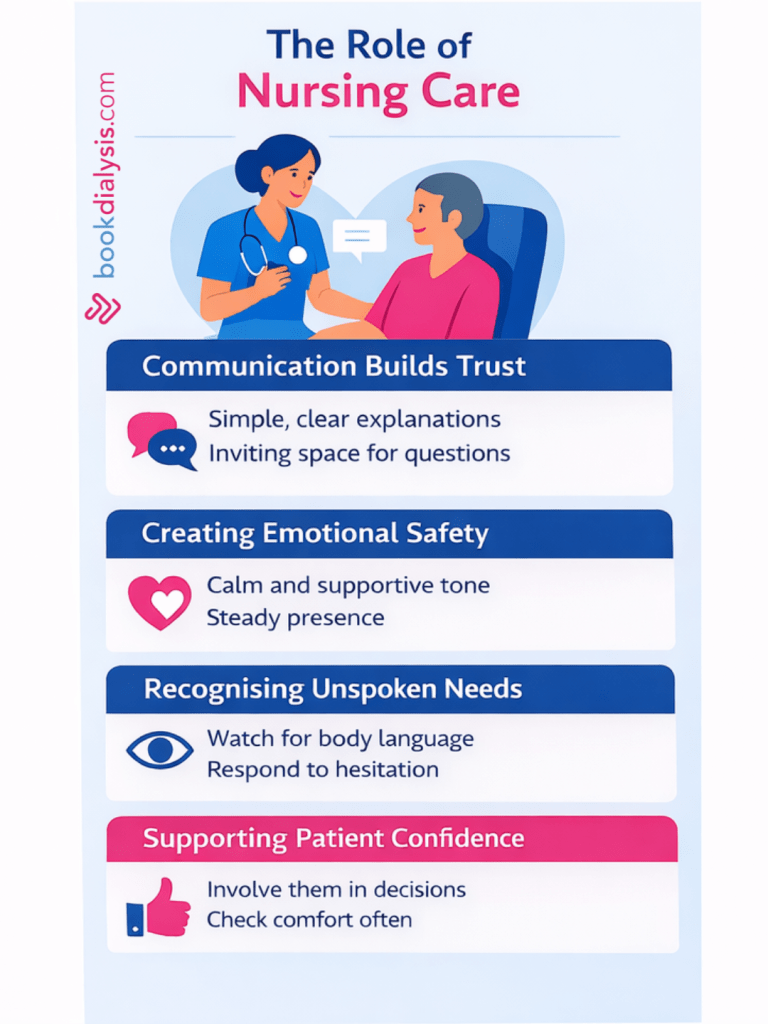
The Role of Nursing Care in Dialysis Patient Psychology
Dialysis Nursing Care Communication Builds Immediate Trust
Clear and calm dialysis nursing care communication is one of the most important factors in supporting patients.
Nursing staff can help by:
- Speaking in a simple and reassuring way
- Explaining actions as they happen
- Allowing space for questions
This helps patients feel included and informed.
Creating Emotional Safety Through Behaviour
Patients often respond more to how care is delivered than to what is said.
Supportive behaviours include:
- A calm tone of voice
- Gentle and confident actions
- Consistent interaction
These create a sense of stability, which supports dialysis patient psychology.
Recognising Unspoken Needs
Patients may not directly ask for reassurance.
Nursing staff can support emotional support for dialysis patients by:
- Noticing body language
- Responding to hesitation
- Offering reassurance without being asked
This level of awareness builds trust quickly.
Supporting Patient Confidence
Encouraging small moments of involvement helps patients feel more in control.
This might include:
- Asking simple preferences
- Checking comfort regularly
- Involving them in small decisions
This supports both emotional wellbeing and confidence.
A Human Approach to Dialysis Care Abroad
At its core, dialysis patient psychology is about feeling safe, understood, and respected.
For patients travelling on dialysis for the first time, nursing care is not just about treatment. It is about connection, communication, and reassurance in a new environment.
At bookdialysis.com, we believe that when patients feel supported emotionally, everything else becomes easier to manage.
A Final Thought
Dialysis patient psychology reminds us that every patient experience is both physical and emotional.
With thoughtful, patient-centred nursing care and simple human connection, patients can feel comfortable even in unfamiliar settings.
And throughout that experience, they are never alone with bookdialysis.com.