What 1,380 people on dialysis told us about the gap between wanting to travel and feeling ready to go.
Dialysis travel can still represent freedom, family, independence and a sense of normal life. Yet bookdialysis research with 1,380 people receiving dialysis across the UK and US found that wanting to travel and feeling ready to travel are not always the same thing.
This article is based on the Travel Dialysis Confidence Report 2026, where you can explore the research behind the findings discussed below.
KEY TAKEAWAY The desire to travel is often already there. Confidence is more likely to grow when people can see a clear path through clinic availability, treatment dates, documents, costs and support, while making decisions with their own renal team.
What did the bookdialysis research explore?
Between March and May 2026, bookdialysis asked 1,380 people receiving dialysis in the UK and US about the emotions, concerns and experiences surrounding travel. The aim was to look beyond the mechanics of arranging treatment away from home and listen more closely to what the journey feels like.
One message came through clearly: travel still matters. For many respondents, it was connected to time with family, personal independence and the ability to keep having meaningful experiences alongside treatment.
Three-quarters of respondents (75%) said travel was important to them personally, showing that the desire to travel remains strong for many people receiving dialysis.
“Travel is still very important to me, but dialysis planning needs to be smoother and more predictable.”
That distinction matters. Dialysis travel is not only a question of whether a trip is technically possible. It is also a question of whether the steps ahead feel understandable, reliable and manageable.
Why can wanting to travel and feeling ready be so different?
A journey can bring several connected decisions into focus at once: finding a suitable dialysis clinic, coordinating treatment and travel dates, understanding costs, preparing the information requested by the receiving clinic and knowing who to contact when something is unclear.
Each task may look administrative on its own. Together, they can carry emotional weight. When one part remains uncertain, the whole trip may begin to feel less manageable.
“I would like travelling to feel more normal and less complicated.”
The research also showed that worry and hope can exist together. Someone can have genuine concerns about dialysis abroad and still want to visit family, take a holiday or protect a sense of independence.
That mix of emotions was visible across the responses: 40% said they felt worried about travelling on dialysis, 33% felt overwhelmed and 32% felt anxious. At the same time, 35% described themselves as hopeful, 31% as determined and 22% as excited. Feeling anxious does not cancel the wish to travel. It often signals a need for clearer information and appropriate support.

What does the confidence gap tell us about a first trip?
One of the clearest patterns appeared when responses from people who had travelled since starting dialysis were compared with those from people who had not.
RESEARCH FINDING- 69.5% of respondents who had travelled said they felt confident or very confident about travelling on dialysis. Among those who had not travelled, the figure was 20.8%.
This comparison does not prove that travelling causes confidence. The survey establishes an association, not cause and effect. People who already felt more confident may have been more likely to travel, while experience may also make later trips feel more familiar. Other personal and health circumstances may influence both decisions.
What the result does highlight is how different the first journey can feel. A returning dialysis traveller may already understand the rhythm of clinic communication, appointments and paperwork. Someone considering a first holiday may be encountering every part of that process for the first time.
Readers who want the full planning sequence can move next to our step-by-step guide to travelling abroad on dialysis. Those still deciding whether a first trip feels right may find reassurance in what people often learn after their first dialysis holiday.
What helps build confidence in dialysis travel?
Across the research, three themes kept returning: trust, clearer planning and support. They are closely connected, and each one can reduce a different kind of uncertainty.
1. Trust that feels concrete
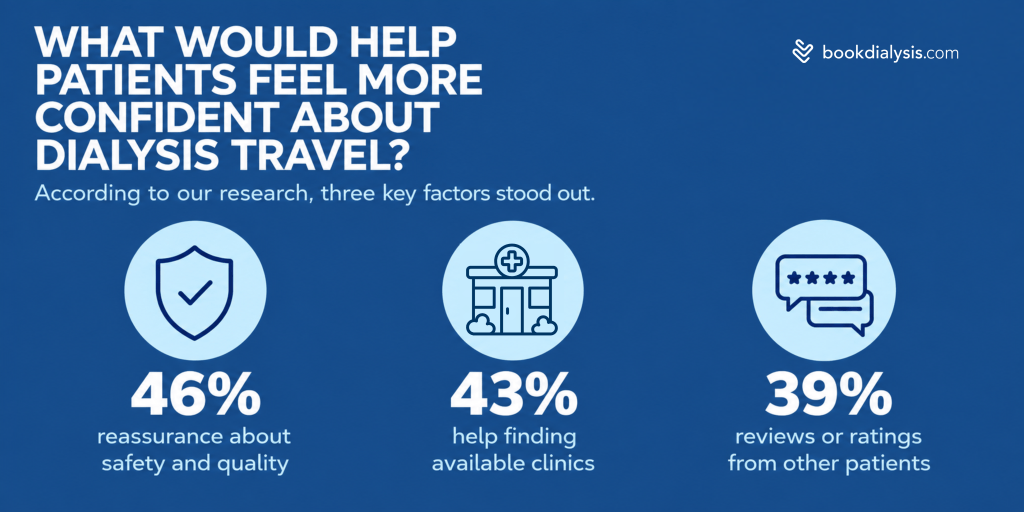
Trust was not described as a vague feeling. It meant knowing that a suitable clinic had been identified, understanding what arrangements were in place, receiving clear information and knowing where to turn with a question. Respondents also valued the experiences of people who had travelled before them. When respondents were asked what would help them feel more confident, 46% selected reassurance about safety and quality, 43% wanted help finding available clinics and 39% pointed to reviews or ratings from other patients.
“Comfort that everything that is in place is reliable.”
Clear communication is part of that reliability. Our article on how to reduce communication barriers in dialysis travel looks more closely at the questions, contacts and language needs that can affect a journey.
2. Planning that connects the whole journey
For respondents who had travelled, costs and coordinating travel dates with treatment were among the most difficult parts of planning. Among those who had not travelled, there was no single barrier: safety concerns, planning difficulty, lack of confidence, uncertainty about arranging treatment elsewhere, costs and individual health circumstances all played a role.
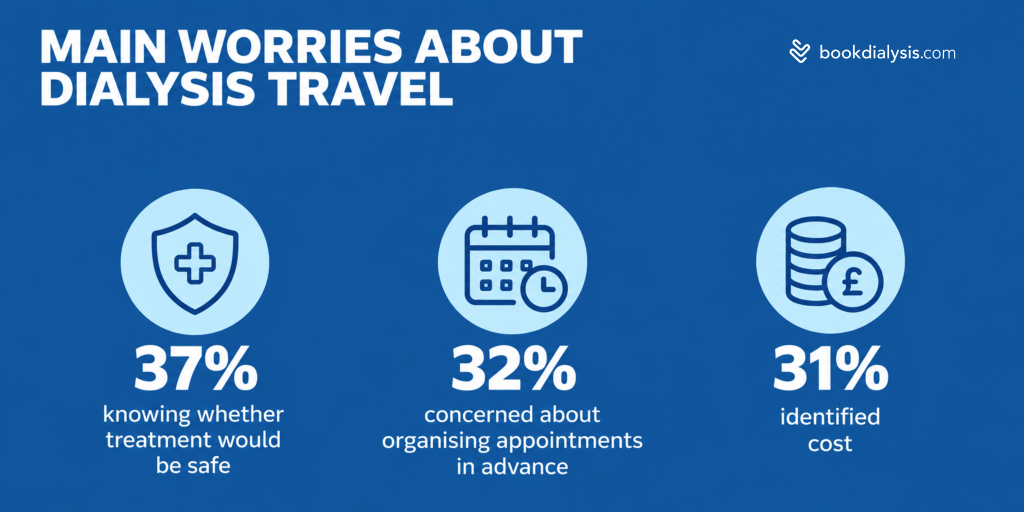
Among the main worries identified in the research, 37% mentioned knowing whether treatment would be safe, 32% were concerned about organising appointments in advance and 31% identified cost.
This is why a useful plan connects the pieces instead of treating them as separate checklists. The destination, current clinic availability, treatment dates, accommodation, transport and the traveller’s own needs must work together. Requirements and costs can vary, so the relevant clinic, insurer or responsible authority should confirm the details that apply to a specific trip.
For a focused explanation of the practical process, read what people should know when booking dialysis abroad. If several uncertainties are still competing for attention, these 10 common questions before a first trip can help organise the conversation with a renal team and travel companion.
3. Digital support that still feels human
74% of respondents said they would feel comfortable or very comfortable using an online service to help arrange dialysis while travelling. But moving a process online is not enough by itself. People still want information they can understand, visibility over what happens next and access to support when something is unclear.
That is the role bookdialysis.com aims to play in the dialysis travel journey: helping people explore destinations and dialysis clinics, understand the next step and request arrangements through one connected path. Live availability and clinic-specific requirements should always be confirmed for the intended dates.
How can someone move from uncertainty to a clearer next step?
Confidence does not have to arrive all at once. A first step can simply be turning a general wish into a few questions that can be answered.
– Start with the reason for the trip
A family visit, a short break or a long-planned destination may call for different timing, support and levels of complexity. The goal helps define what “manageable” means for the individual traveller.
– Discuss the plan with the renal team
Fitness to travel, treatment needs and contingency planning are individual clinical matters. A person’s own renal team is best placed to advise on them.
– Check treatment before committing to the rest
Explore current destinations and clinics, ask about the intended dates and confirm the requested information. Avoid making non-refundable travel arrangements until dialysis arrangements are confirmed.
– Keep the journey visible
Bring clinic details, treatment appointments, travel confirmations, insurance information and important contacts into one shared plan. Knowing what is confirmed, what is pending and who is responsible for the next action can make the process easier to follow.
* A note for caregivers and travel companions
Caregivers often carry part of the coordination burden while also supporting the traveller emotionally. Agreeing who will track appointments, documents, transport and contact details can reduce duplicated effort and prevent one person from holding the entire plan in their head.
Share information with the traveller’s consent, keep decisions centred on their preferences and leave room for the caregiver’s own questions. Our simple guide for travelling with someone on dialysis offers a useful starting point for planning together.
From wanting to travel to feeling ready
The biggest lesson from the research is not that people on dialysis need to be persuaded to travel. For many, the wish is already present. What may be missing is a reliable route from motivation to reassurance, confidence, clarity and action.
Dialysis changes how a journey needs to be planned, but it does not have to remove travel from the picture. A clearer process, dependable information and human support can help each person decide what feels right for them, at their own pace and with guidance from their renal team.
READY FOR THE NEXT STEP? Explore current destinations and dialysis clinic options on bookdialysis.com, then discuss your plans with your renal team and confirm treatment arrangements before making non-refundable travel bookings.
FAQs
- Is it normal to feel uncertain about dialysis travel?
Yes. In the bookdialysis research, worry, anxiety and feeling overwhelmed appeared alongside hope and determination. Uncertainty can reflect the number of unfamiliar decisions involved, especially before a first trip.
- Does travelling on dialysis automatically build confidence?
The survey does not prove cause and effect. People who had travelled reported much higher confidence than those who had not, but several factors may explain that relationship. The finding should be understood as an association.
- What can make a first dialysis holiday feel more manageable?
Clear clinic information, confirmed treatment arrangements, an understanding of requested documents and costs, accessible contacts and a shared plan can all reduce uncertainty. Individual clinical questions should be discussed with the traveller’s renal team.
Can a caregiver help arrange dialysis abroad?
A caregiver or family member can help coordinate dates, documents, transport and contacts with the traveller’s consent. Responsibilities and information-sharing preferences should be agreed together.
What should be confirmed before booking the rest of the trip?
Confirm that suitable dialysis arrangements are available for the intended dates and follow the receiving clinic’s instructions. Requirements vary. Discuss fitness to travel and treatment needs with the renal team, and verify payment, coverage and insurance details with the relevant organisations.
Read our LinkedIn articles:
What’s Really Holding Dialysis Patients Back From Traveling? | LinkedIn
What Helps People on Dialysis Feel More Confident About Travel? | LinkedIn